1,426 hectares of aviation infrastructure in Navagam village, 80 km southwest of Ahmedabad and 20 km from the Dholera SIR core area.
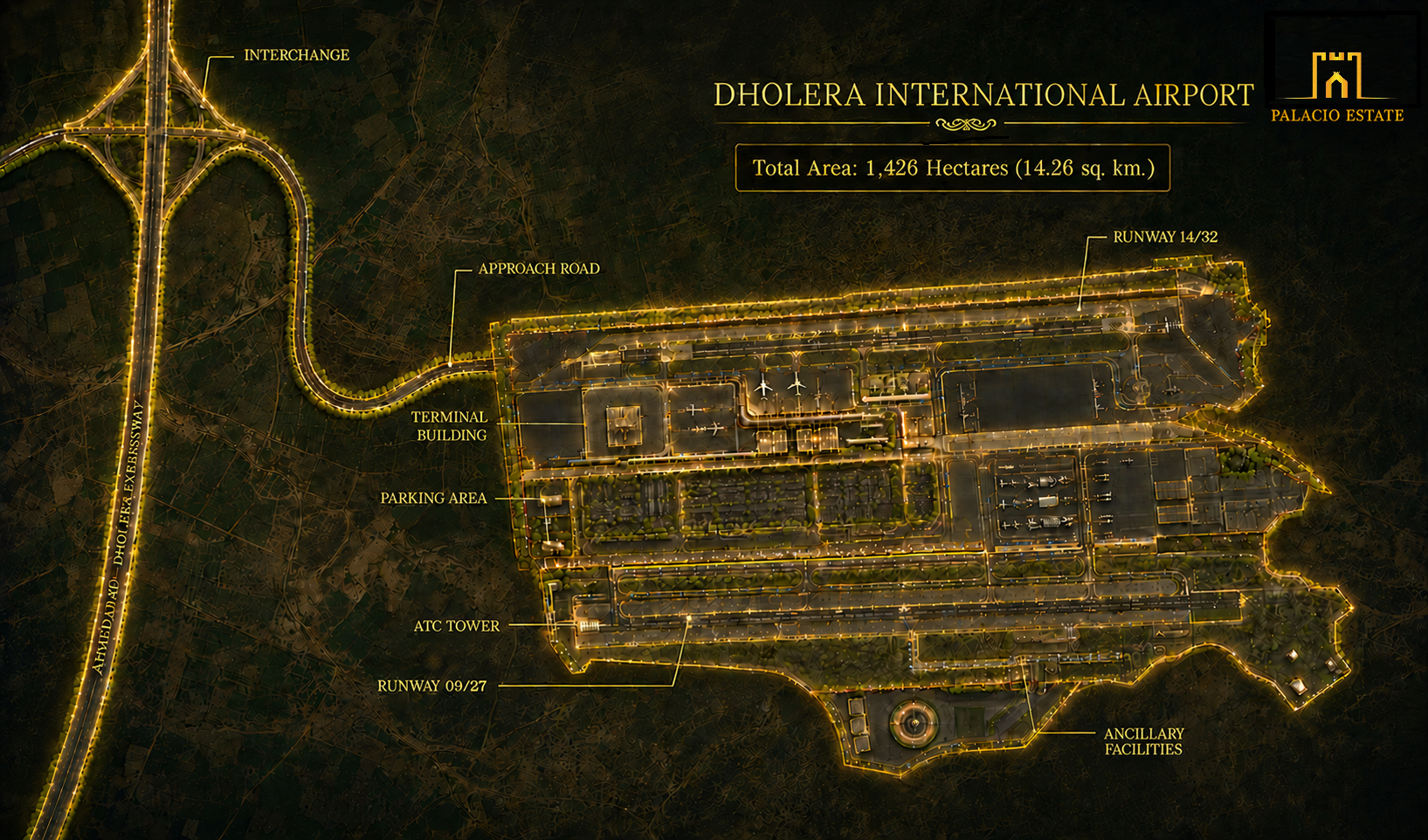
Dholera International Airport — Campus Blueprint. Total Area: 1,426 Hectares (14.26 sq. km.)
Dholera International Airport is located in Navagam village, approximately 80 km southwest of Ahmedabad. The site sits 20 km from the Dholera SIR core area, close enough for quick access but far enough to avoid urban encroachment. The total land area covers 1,426 hectares, giving the airport room for future expansion without land acquisition headaches.
The airport is classified as Code 4E, which means it can handle wide-body aircraft like the Boeing 777 and Airbus A350. That classification matters for international cargo and long-haul passenger routes. Code 4E runways are 2,250 meters or longer with specific width and safety area requirements. At 3,200 meters, Dholera's runway exceeds the minimum by nearly 1,000 meters.
The airport is owned by three entities: Airports Authority of India (AAI) holds 51 percent, the Gujarat state government holds 33 percent, and the National Industrial Corridor Development and Implementation Trust (NICDIT) holds the remaining 16 percent. This ownership structure reflects the airport's dual role as both a public infrastructure asset and a catalyst for industrial development in the DMIC corridor.
AAI manages day-to-day operations. Gujarat contributes state-level planning and land coordination. NICDIT ties the airport to the broader National Industrial Corridor program, which spans multiple states. The three-way split ensures no single entity can redirect the airport's focus away from its core mission: serving Dholera's industrial and residential growth.
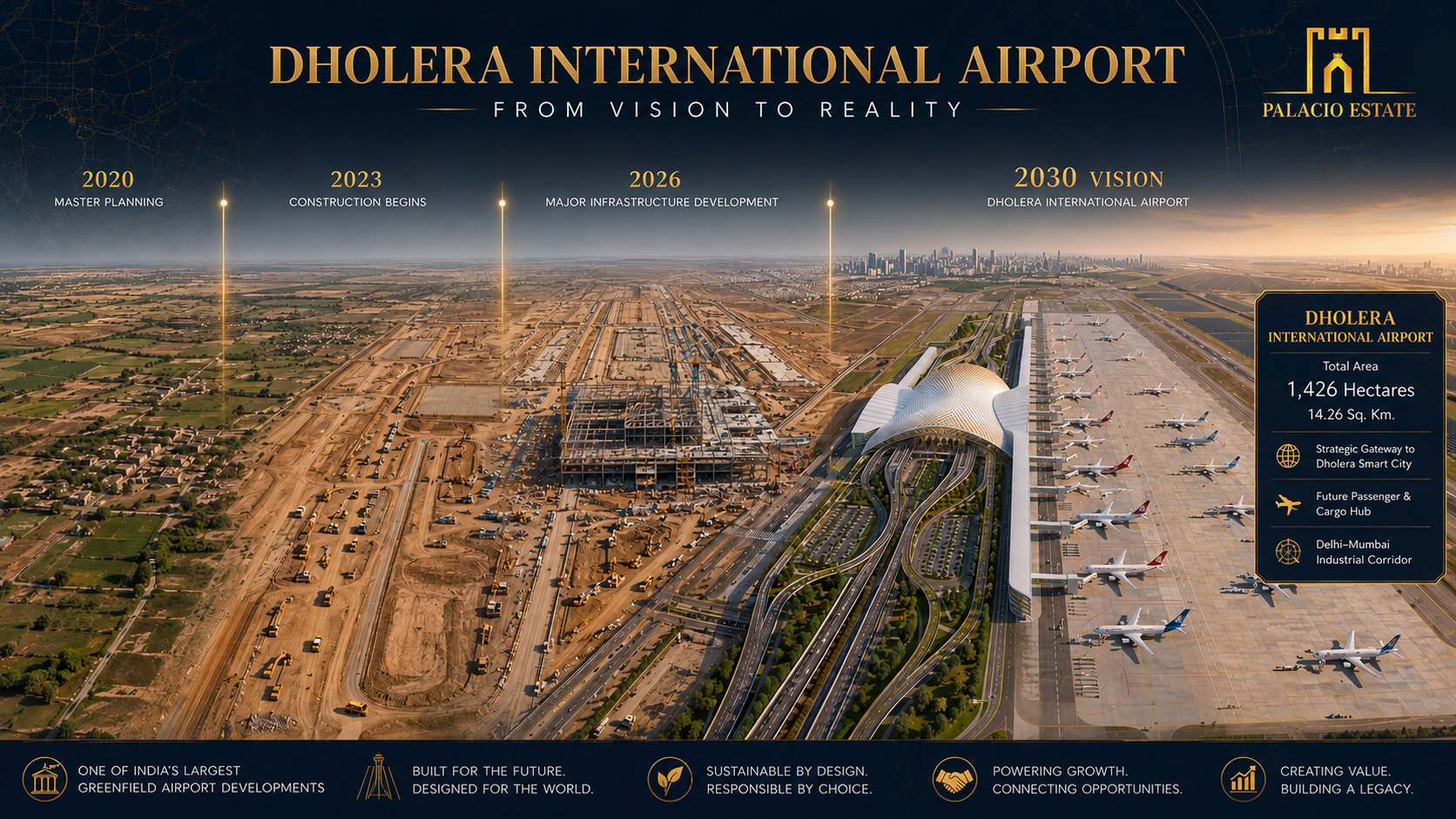
The project was divided into two parts. Part A covers the 3,200-meter runway, taxiways, apron, and associated airside infrastructure. Varaha Infrastructure built Part A at a cost of ₹636 crore. The work was completed in December 2025, making the runway operational for aircraft movements. Part A also includes drainage, lighting, and navigational aids required for Code 4E operations.
Part B covers the passenger terminal, ATC tower, cargo complex, and landside facilities. Yashnand Engineers is handling the 20,000 square meter terminal at a cost of ₹333 crore. The terminal design supports both domestic and international operations. Operational testing is underway through 2026, with full commercial operations expected to follow.
The airport's planning involved multiple specialized firms. Halcrow (now Jacobs) handled the master plan and airfield layout. AECOM contributed to infrastructure design and environmental assessments. Wipro provided smart systems and IT backbone planning. RITES handled railway integration studies, ensuring the semi-high-speed rail spur connects properly to the airport. JICA, Japan's development agency, co-funded feasibility studies as part of the broader DMIC partnership.
| Partner | Role |
|---|---|
| Halcrow (Jacobs) | Master plan, airfield layout |
| AECOM | Infrastructure design, environmental |
| Wipro | Smart systems, IT backbone |
| RITES | Railway integration studies |
| JICA | Co-funded feasibility studies |
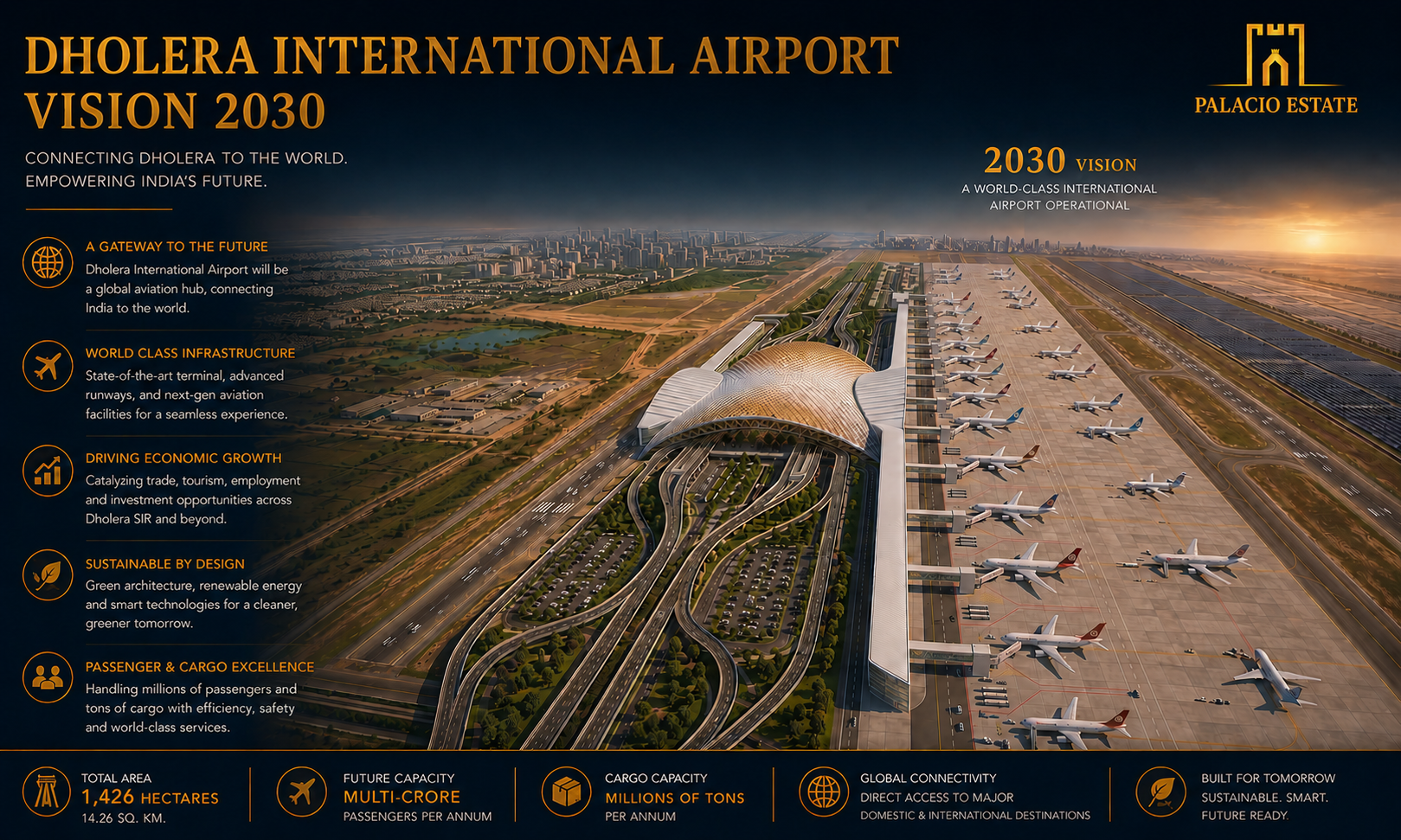
The long-term plan envisions dual 4,000-meter runways capable of handling simultaneous operations. At full build-out, the airport is designed for 50 million passengers annually and significant cargo throughput. That capacity puts it in the same league as Ahmedabad's Sardar Vallabhbhai Patel International Airport, but focused on industrial and logistics traffic rather than just passenger volumes.
The expansion timeline depends on demand signals. The current single-runway configuration handles the initial wave of industrial traffic. A second runway becomes viable once annual movements exceed the capacity threshold, likely in the 2030s. The 1,426-hectare site footprint already reserves land for this expansion, avoiding the land acquisition delays that plague most Indian airport projects.