India's largest integrated solar cell and module manufacturing facility, operational at Dholera SIR.
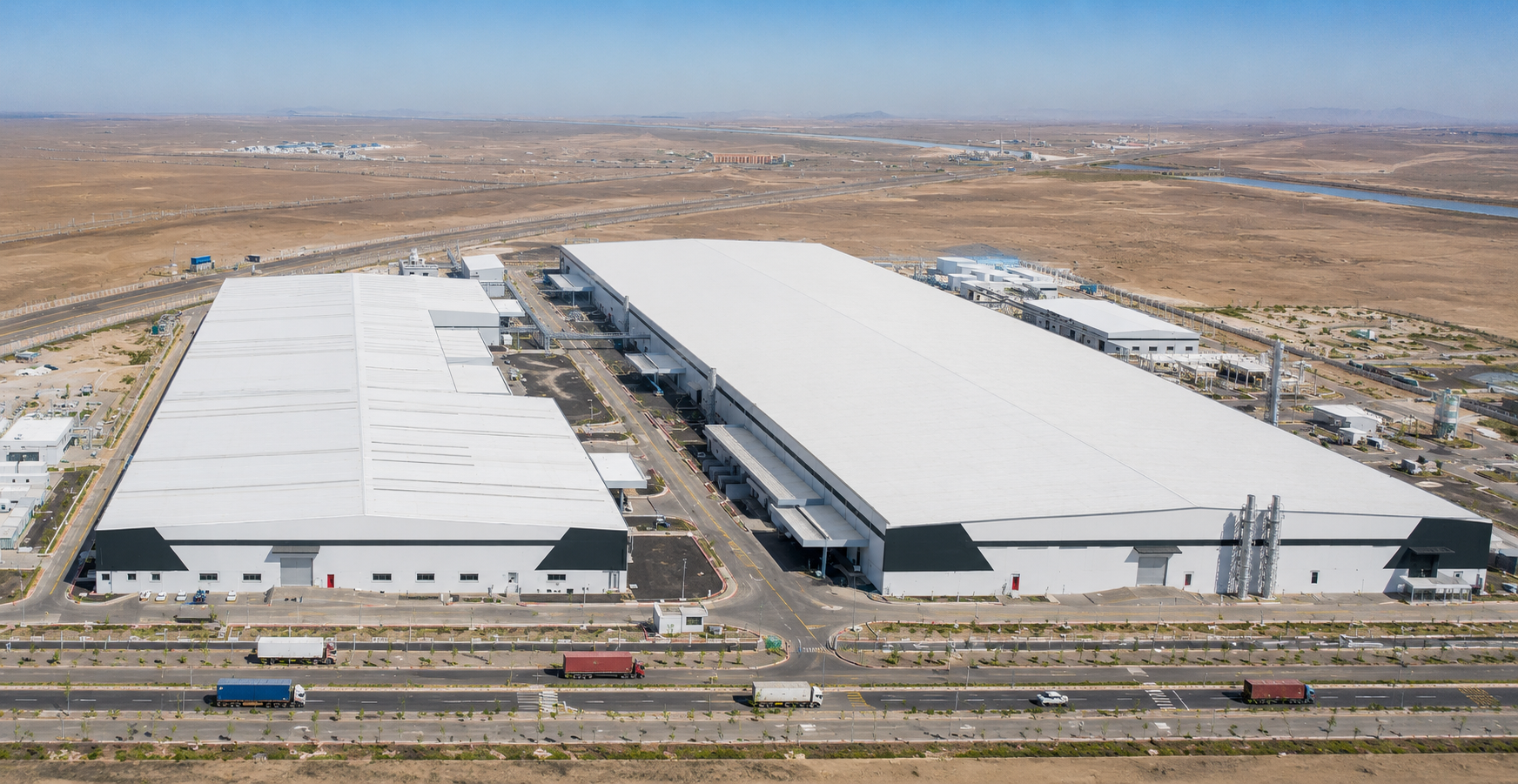
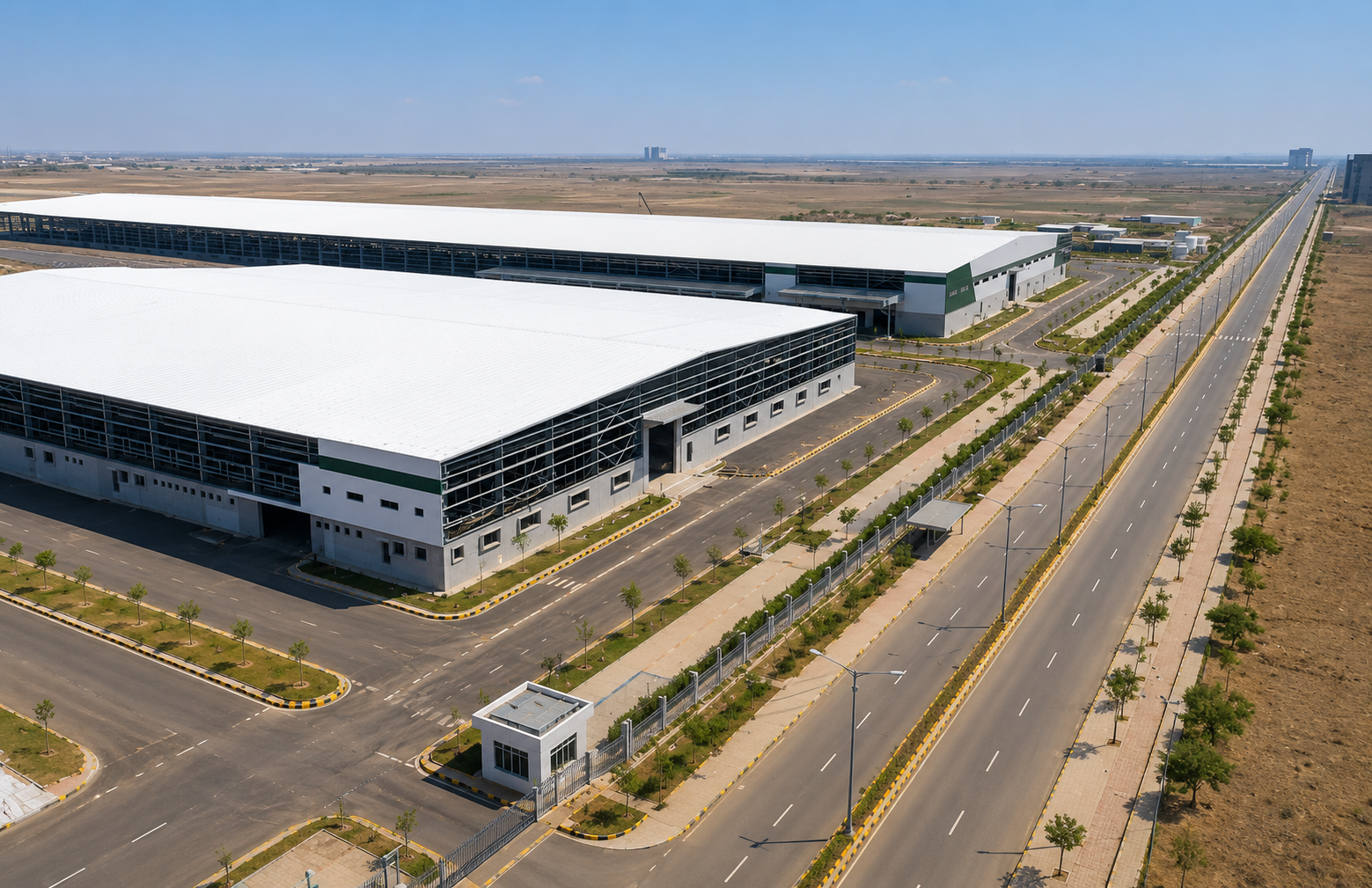
ReNew Photovoltaics set up a solar cell and module manufacturing plant at Dholera SIR in Gujarat. The facility sits on roughly 55 acres within the Special Industrial Region, and it is one of the few fully integrated solar factories in India — meaning it makes both the cells and the modules under one roof rather than importing cells and assembling them locally.
The numbers matter here. The Dholera plant currently operates at 2.4 GW of annual solar module capacity and 2.5 GW of solar cell capacity. To put that in perspective, a single gigawatt can power roughly 750,000 Indian homes. So this one factory, at full output, produces enough solar components to electrify close to 4 million households every year.
ReNew started with mono-PERC cell technology — the workhorse of the current solar industry. The plant was designed from the start to be future-ready for TOPCon (Tunnel Oxide Passivated Contact) cells, which offer higher conversion efficiency. That upgrade path is now being executed.
ReNew announced the Dholera project in May 2021 with a planned investment of around ₹1,200 crore, initially targeting operations by early 2023. That timeline slipped, as most large manufacturing projects do. Module production began first, with the Dholera plant formally commissioned in 2024 as part of ReNew's broader 6.4 GW module capacity spread across Jaipur and Dholera. Solar cell lines followed, with full commissioning of the 2.5 GW cell capacity targeted by September 2024.
The delay from the original 2023 target was not unusual. Setting up a semiconductor-grade clean room for solar cell production involves precision equipment procurement, clean room certification, and process calibration. Getting it right the first time matters more than hitting an arbitrary deadline.
In 2025, ReNew secured ₹870 crore (about $100 million) from British International Investment (BII) to build a new 4 GW TOPCon solar cell facility at Dholera. BII took a minority stake in ReNew Photovoltaics as part of the deal.
TOPCon cells convert more sunlight into electricity than standard mono-PERC cells. The efficiency gain matters at scale — a 1-2 percentage point improvement in cell efficiency translates to significantly more power output per panel over a 25-year lifespan. For utility-scale solar farms, that difference adds up to crores in additional revenue.
After this expansion, ReNew Photovoltaics expects to reach roughly 6.4 GW of cell capacity, matching its 6.4 GW module capacity. The idea is straightforward: when you make as many cells as you do modules, you stop depending on third-party cell suppliers. That gives you control over quality, cost, and delivery timelines — all of which matter when you are competing for large EPC contracts.
The Dholera plant runs with heavy automation. Robotic arms handle wafer loading and cell stringing. Automated guided vehicles move materials between production stations. AI-driven defect detection systems inspect every cell for micro-cracks, paste printing defects, and alignment issues that the human eye would miss.
The facility operates as a zero liquid discharge plant. All water used in manufacturing gets treated and recycled on-site. In a region where freshwater is scarce and groundwater is saline, this is not an environmental checkbox — it is an operational necessity. Without recycling, the plant would consume millions of liters of freshwater daily, which is neither sustainable nor politically acceptable in coastal Gujarat.
Clean room conditions are maintained throughout the cell production area. Even small particles can cause defects in solar cells, so air filtration, temperature, and humidity are tightly controlled. The module assembly area is less stringent but still requires controlled conditions for lamination and quality testing.
ReNew picked Dholera for several practical reasons. The site sits within a Special Industrial Region with pre-built infrastructure — roads, drainage, power supply, and water connections are already in place. Plug-and-play plots mean you do not spend two years just getting basic utilities to your factory gate.
Logistics matter too. The plant needs to import some specialty chemicals and equipment, and export finished modules to international customers. Mundra Port, India's largest commercial port, is within driving distance. The Ahmedabad-Dholera Expressway (109 km) cuts travel time to Ahmedabad's airport and rail network to under an hour.
Power supply is another factor. Solar cell manufacturing is energy-intensive. The nearby 5,000 MW Dholera Ultra Mega Solar Park provides access to cheap, reliable electricity generated from the same sunlight that the factory's finished panels will eventually capture. There is a certain symmetry to manufacturing solar panels using solar power.
And then there is the government support structure. Gujarat offers subsidized land, reduced power tariffs, and stamp duty concessions within the SIR. The central government's Production Linked Incentive (PLI) scheme for solar module and cell manufacturing provides financial incentives tied to domestic production volumes. ReNew's Dholera facility qualifies under this scheme, which improves the project's economics and makes domestic manufacturing competitive against cheaper Chinese imports.
India currently imports a significant share of its solar cells and modules, primarily from China. The government wants to change that. The PLI scheme, combined with basic customs duty on imported solar cells and modules, is designed to make domestic manufacturing economically viable.
ReNew's Dholera plant is one of the concrete outcomes of that policy push. It is not the only one — Adani Solar operates a large facility at Mundra, and Tata Power Solar has manufacturing in South India. But ReNew's Dholera plant is among the largest integrated cell-and-module operations in the country, and its expansion to 6.4 GW puts it in the top tier of Indian solar manufacturers.
The employment impact runs into thousands. The initial 2 GW phase was expected to create around 1,250 to 2,500 jobs, depending on whether you count direct plant staff or the broader employment effect in logistics, maintenance, and supply chain services. The 4 GW TOPCon expansion is expected to add over 2,000 more jobs. For Dholera, where the residential population is still ramping up, these are significant numbers.
The ReNew plant plugs into the same ecosystem that supports the Tata semiconductor fab and the data centers under development. Reliable power from the solar park. Zero liquid discharge water treatment. Expressway and port access for logistics. A trained workforce emerging from the education district.
But the ReNew facility also does something specific for Dholera's credibility. It proves that manufacturing can happen here — not just planned, not just announced, but actually producing output. The plant ships finished modules to customers. That is a different category of evidence than a groundbreaking ceremony or an MOU signing.
For someone evaluating Dholera as an investment or residential location, the ReNew plant answers a simple question: does anything actually work here yet? The answer, backed by real production data and a functioning factory floor, is yes.
← Back to Industries