109 km of access-controlled highway connecting Gujarat's largest city to its smart city. Inaugurated by the Prime Minister on March 31, 2026.
The Ahmedabad-Dholera Expressway is designated as NH-751 and stretches 109 km between the two cities. It is a 4-lane access-controlled highway, engineered to be scalable to 8 lanes as traffic grows. The design speed sits at 120 km/h, and the corridor is built to handle 25,000 passenger car units (PCU) per day. The project cost ₹3,196 crore to construct.
Before the expressway, driving from Ahmedabad to Dholera took 2.5 to 3 hours through congested state highways and narrow village roads. Now, that same journey takes roughly 55 minutes. The time savings matter for daily commuters, industrial logistics, and airport access. It is one of the fastest transformations in Gujarat's road infrastructure history.
The 109 km corridor was divided into 4 construction packages, each awarded to different contractors. Sadbhav Engineering handled one stretch, GHV India another, and MKC Infrastructure managed a third. The fourth package rounded out the full route from Ahmedabad's outskirts to the Dholera SIR boundary. Work proceeded in parallel across all four segments.
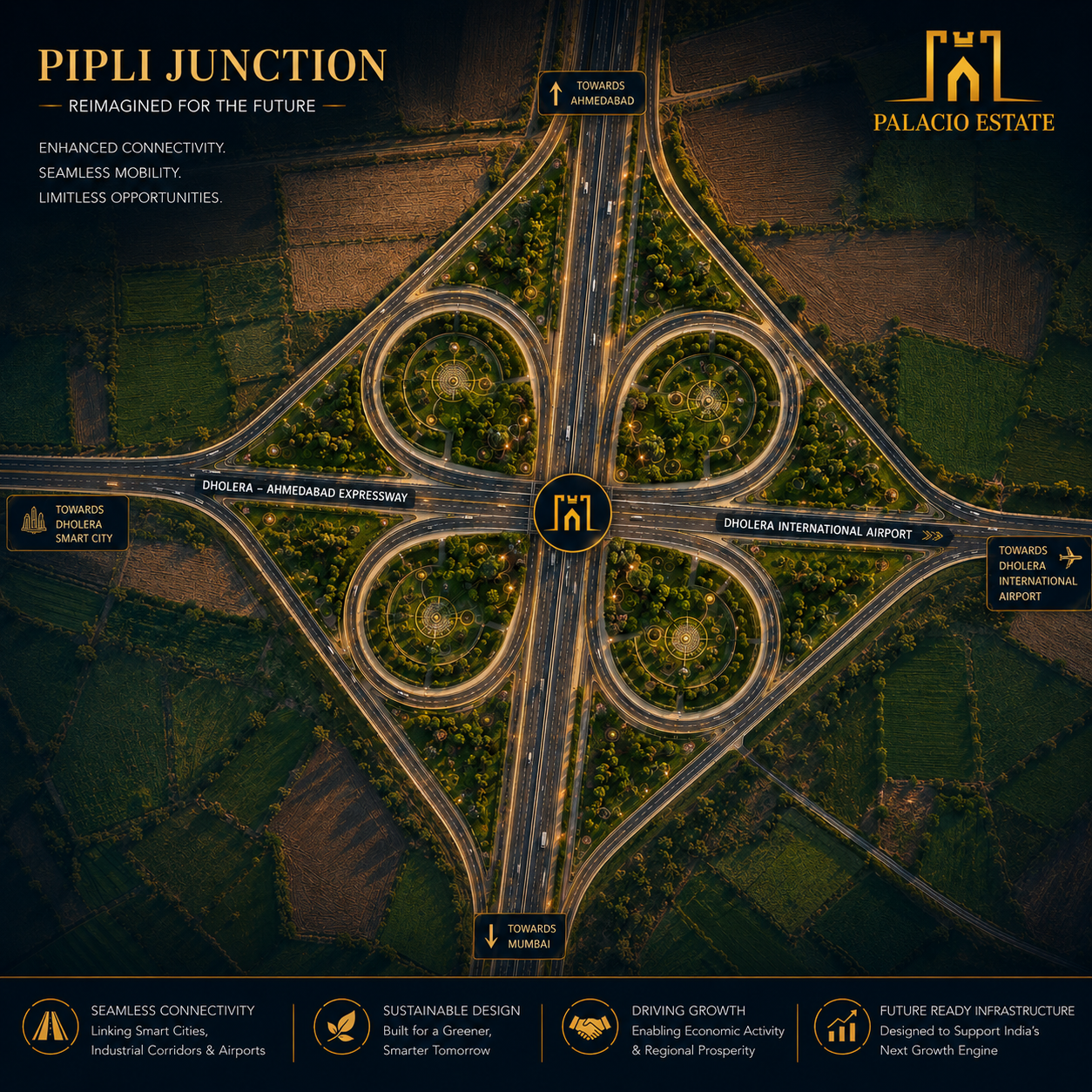
A notable engineering feature is the 9.56 km airport spur. This branch road connects the main expressway to Dholera International Airport, allowing direct access without passing through the industrial zone. The spur includes its own interchange and is designed for future expansion as airport traffic increases.
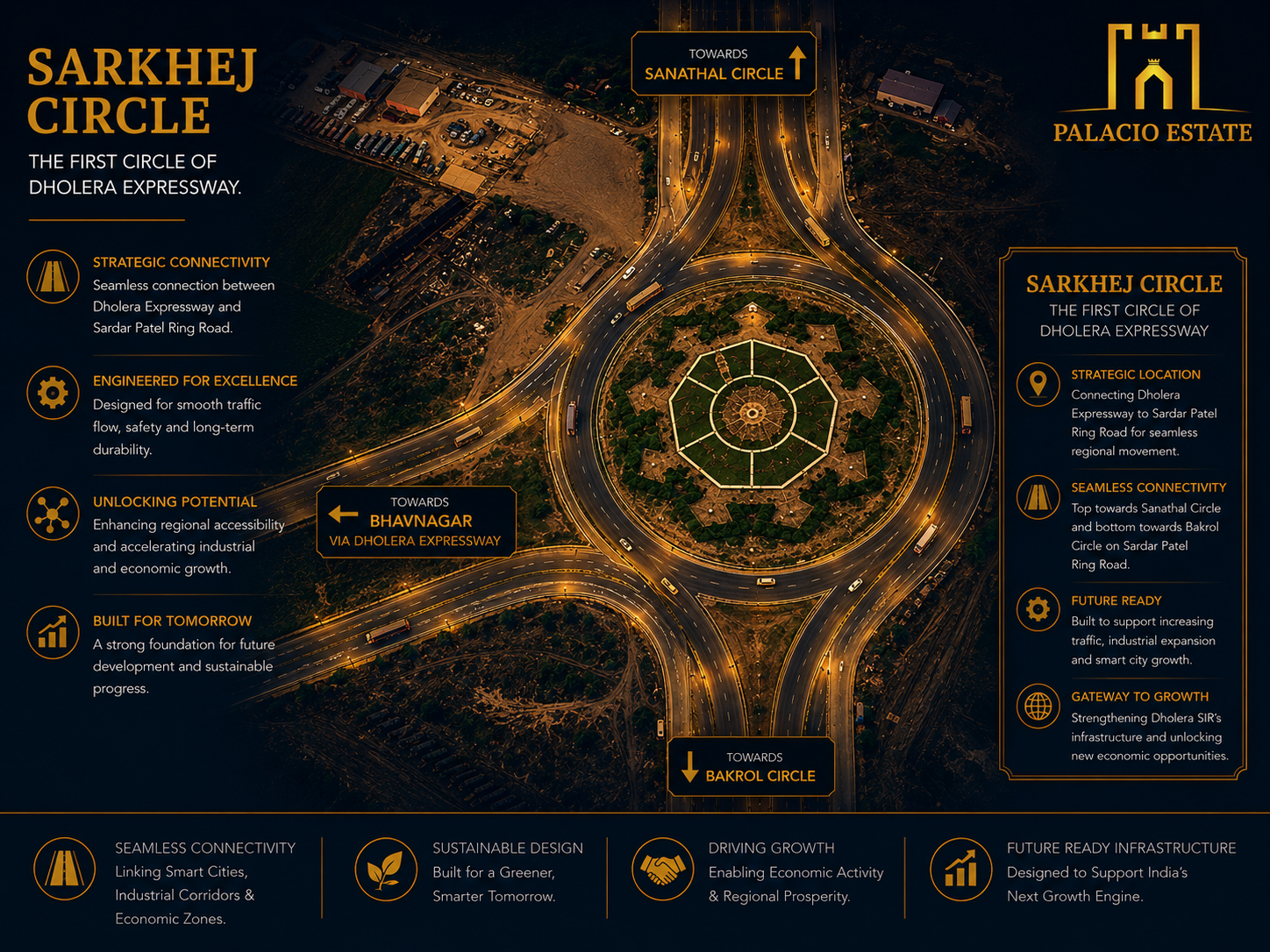
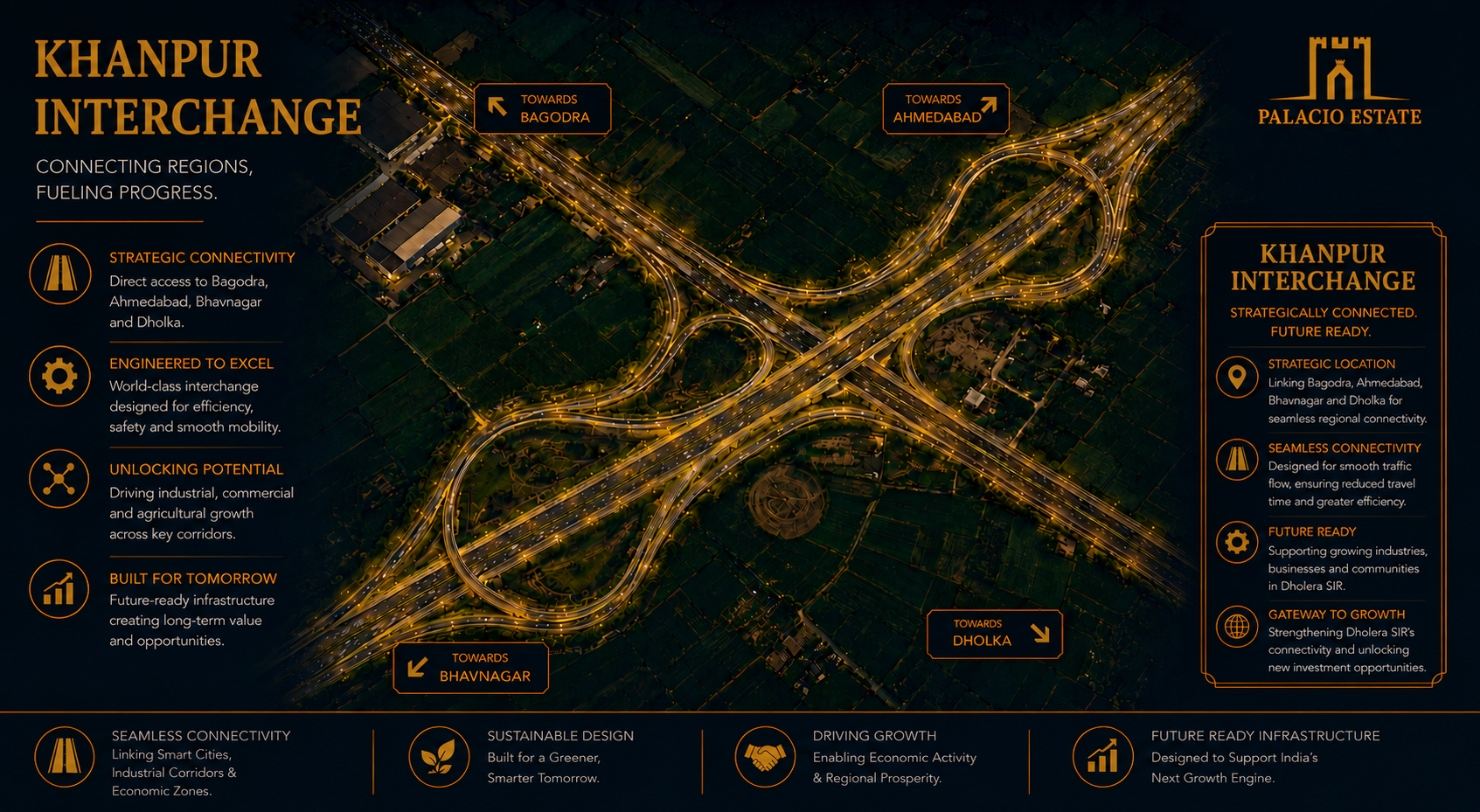
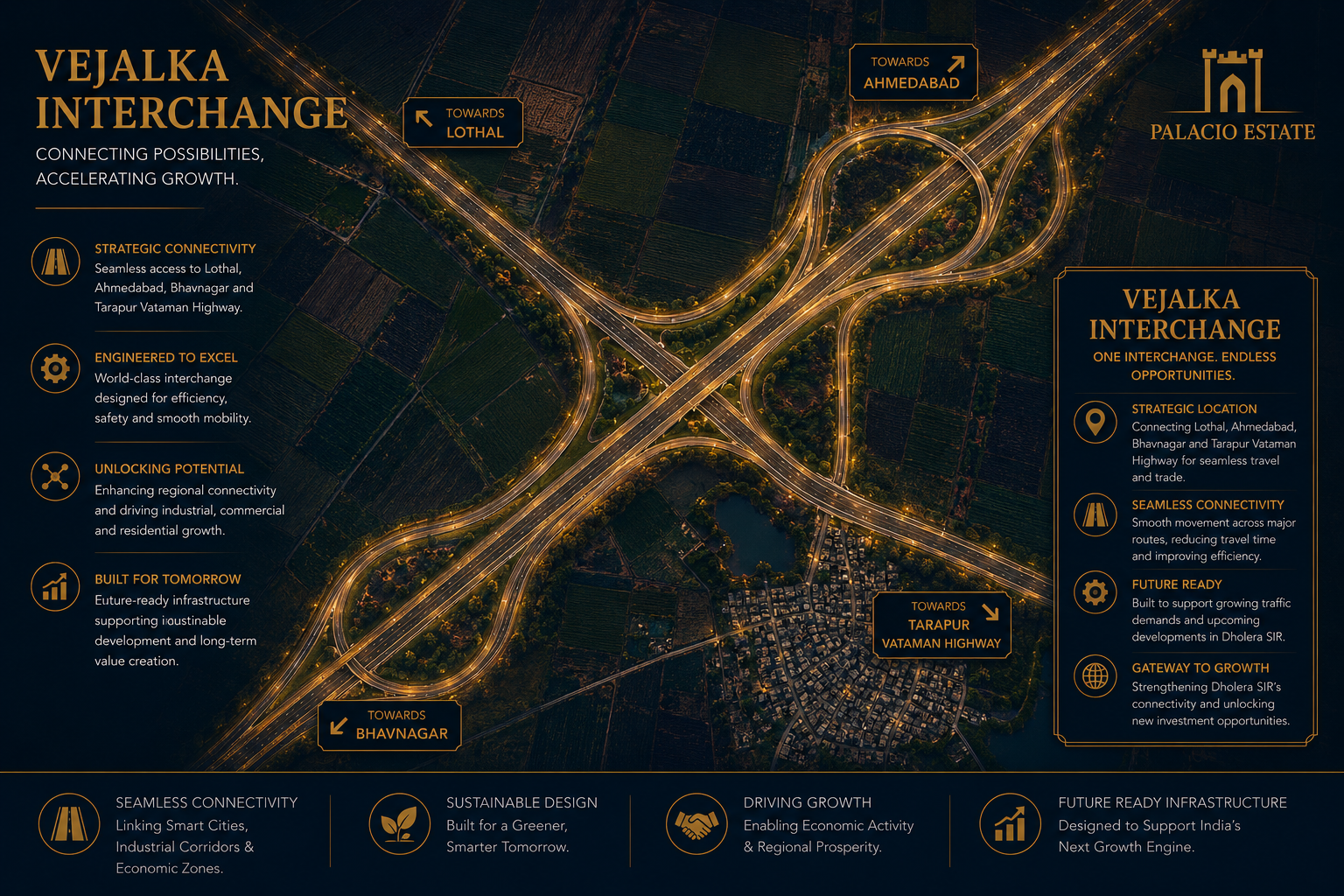
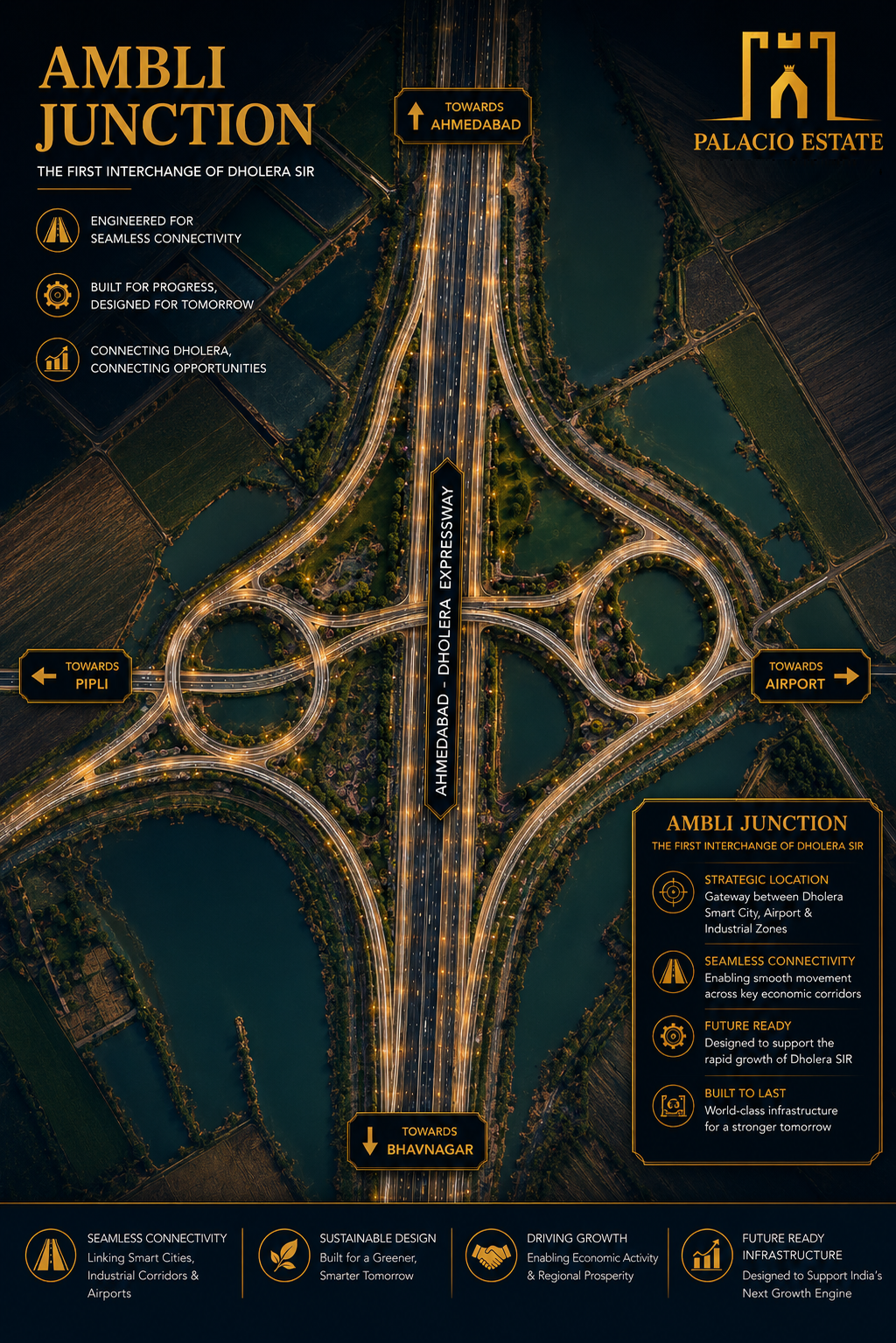
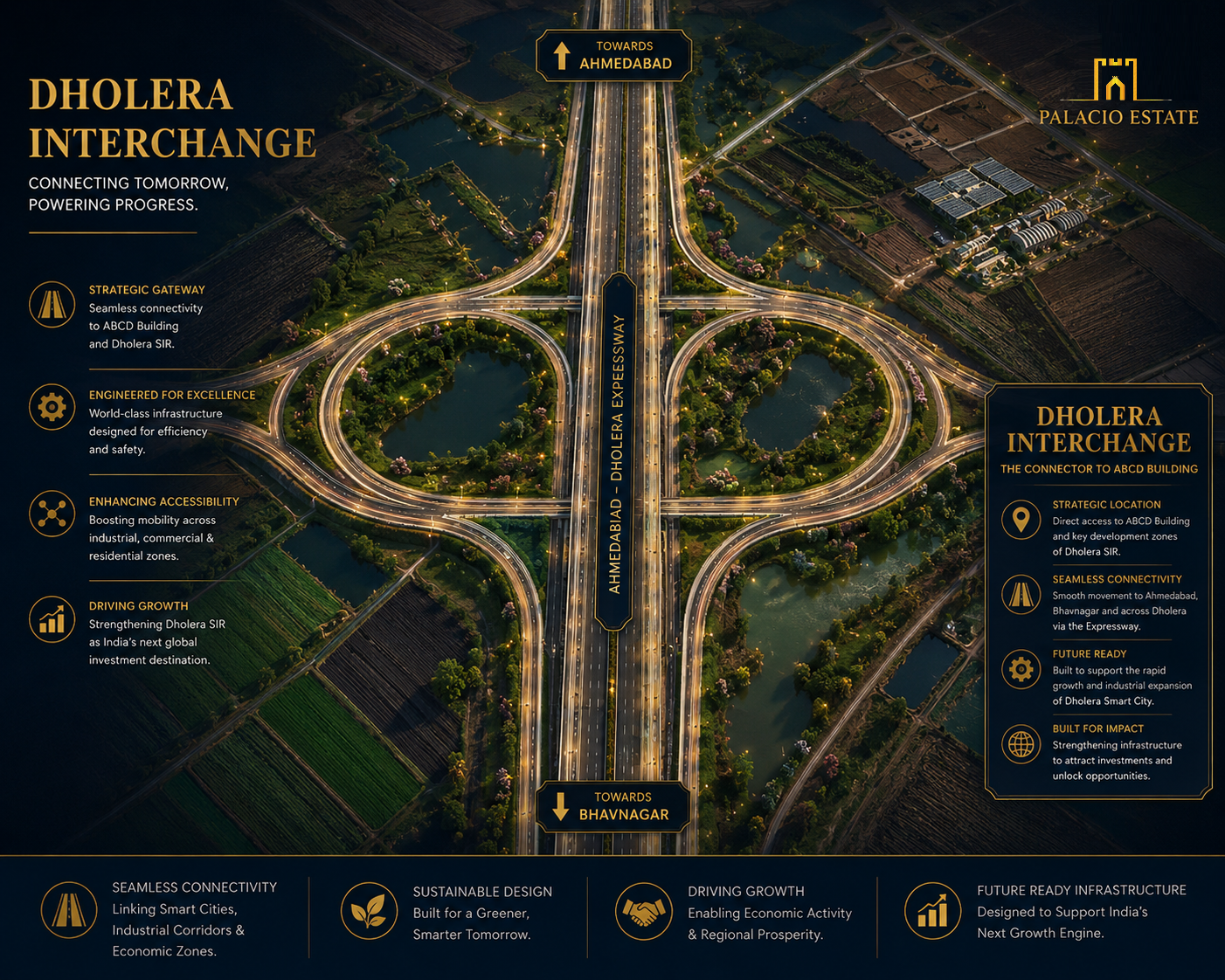
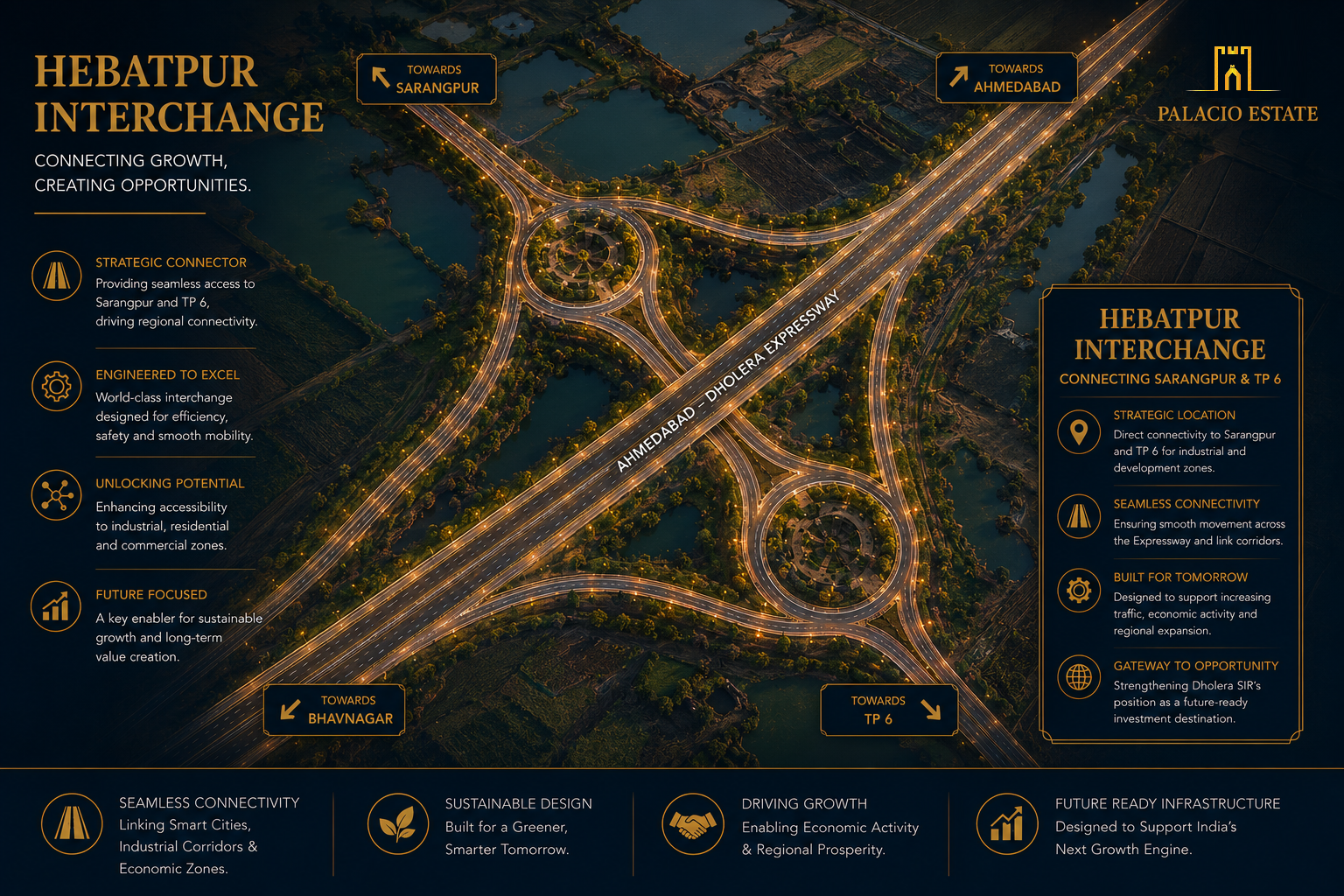
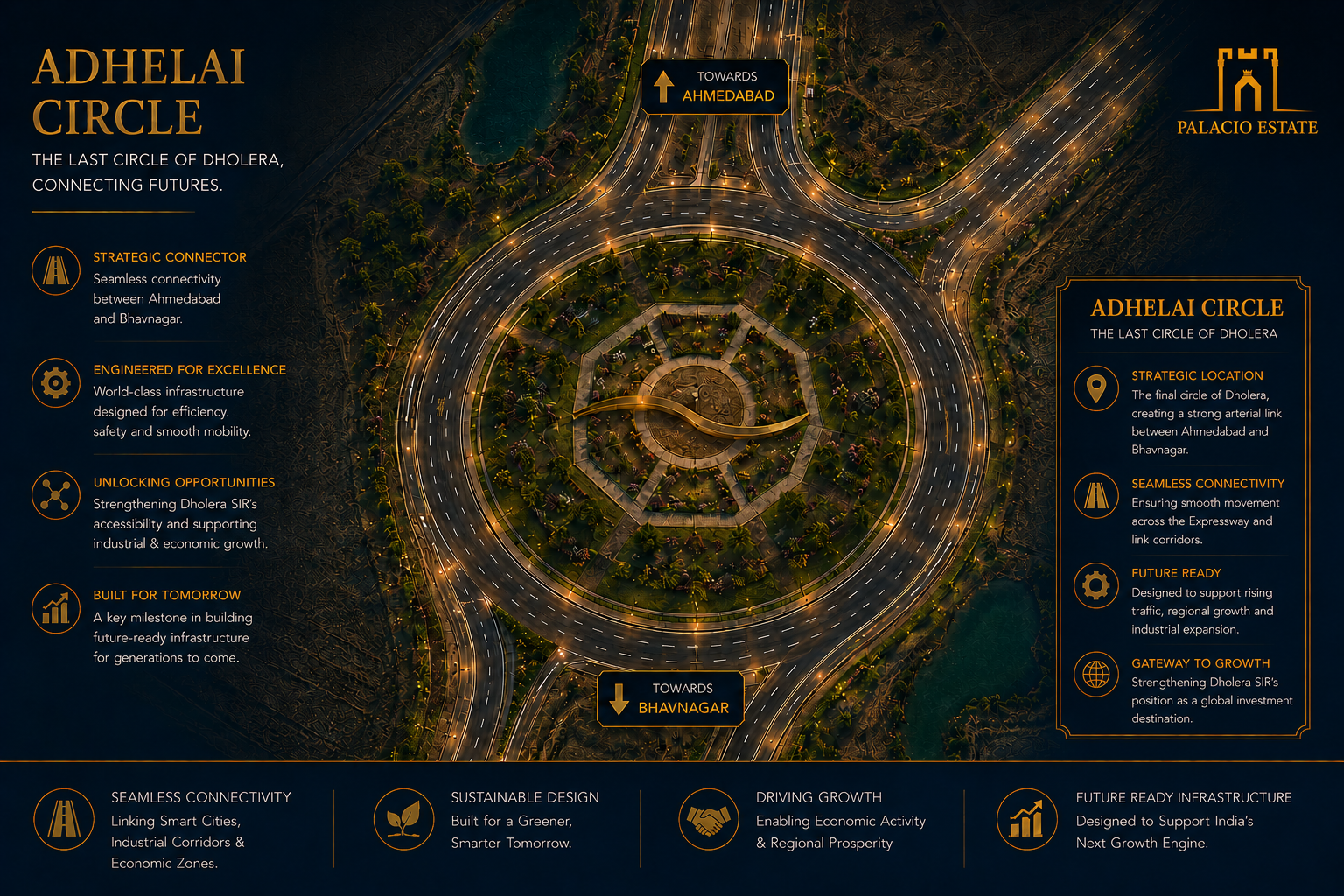
The expressway includes nine interchanges that connect to surrounding towns and industrial areas. From north to south, the interchanges are at Sarkhej, Sindhrej, Khanpur, Vejalaka, Pipli, Ambli, Dholera, Hebatpur, and Adhelai. Each interchange provides controlled access, meaning vehicles enter and exit through dedicated ramps rather than at-grade crossings. This keeps through-traffic moving at design speed.
| Interchange | Km | Connection |
|---|---|---|
| Sarkhej | 0.0 | Main entry gateway. Connects Sardar Patel Ring Road and NH-8A to the expressway start. |
| Sindhrej | 22.0 | Near Sindhrej village. marks the end of Package 1 and local access point. |
| Khanpur | 28.1 | Diamond junction connecting to Khanpur, Kavitha, and Mizapur rural and industrial belt. |
| Vejalaka | 48.5 | Mid-corridor access. Marks the boundary between Package 2 and Package 3. |
| Pipli / Airport | ~71.0 | Massive diamond interchange connecting to Dholera International Airport via 9.56 km dedicated link road. |
| Ambli | ~90.0 | Primary northern gate into Dholera SIR. Feeds into activation zones and TP grids. |
| Dholera | ~95.0 | Core Dholera SIR interchange. Direct access to smart city center, industrial zones, and ABCD building. |
| Hebatpur | ~102.0 | Eastern access to Dholera SIR. Connects to residential zones and Lothal corridor. |
| Adhelai | 109.0 | Southern terminus. Connects to SH-6 toward Bhavnagar city and NH-751 continuation. |
The expressway incorporated recycled materials into its construction. Processed waste from the Pirana landfill was used as aggregate in the road base. Fly ash from nearby power plants replaced a portion of cement in concrete mixes. These choices reduced the demand for virgin quarry materials and kept waste out of landfills.
Environmental mitigation included planting 97,195 trees along the corridor. The tree count was tracked as part of the project's environmental compliance requirements. Green barriers and stormwater management systems were installed to handle runoff from the paved surfaces. The combination of recycled inputs and ecological restoration set a precedent for future highway projects in Gujarat.
The numbers tell the story. The old route from Ahmedabad to Dholera took 2.5 to 3 hours depending on traffic and road conditions. The new expressway cuts that to 55 minutes. That is a 60 to 70 percent reduction in travel time. For an industrial worker commuting daily, or a logistics truck carrying cargo to the airport, the savings compound quickly.
The expressway also changes how people think about Dholera. Before, the 109 km distance felt like a barrier. Now, it feels like a commute. The psychological shift matters as much as the physical one. Companies evaluating Dholera for investment see a city that is genuinely close to Ahmedabad, not isolated in the southern hinterland.
For visitors, the expressway opens up a direct route to the National Maritime Heritage Complex at Lothal. The museum sits near the expressway corridor, and the drive from Ahmedabad takes about 55 minutes. What used to be a tiring 2.5 to 3 hour journey on state highways is now a straightforward morning trip. This accessibility matters for tourism, for school visits, and for the economic viability of the entire Lothal development region.