India's first indigenous semi-high-speed broad-gauge rail corridor. 108 km, 13 stations, designed for daily workforce commuting.
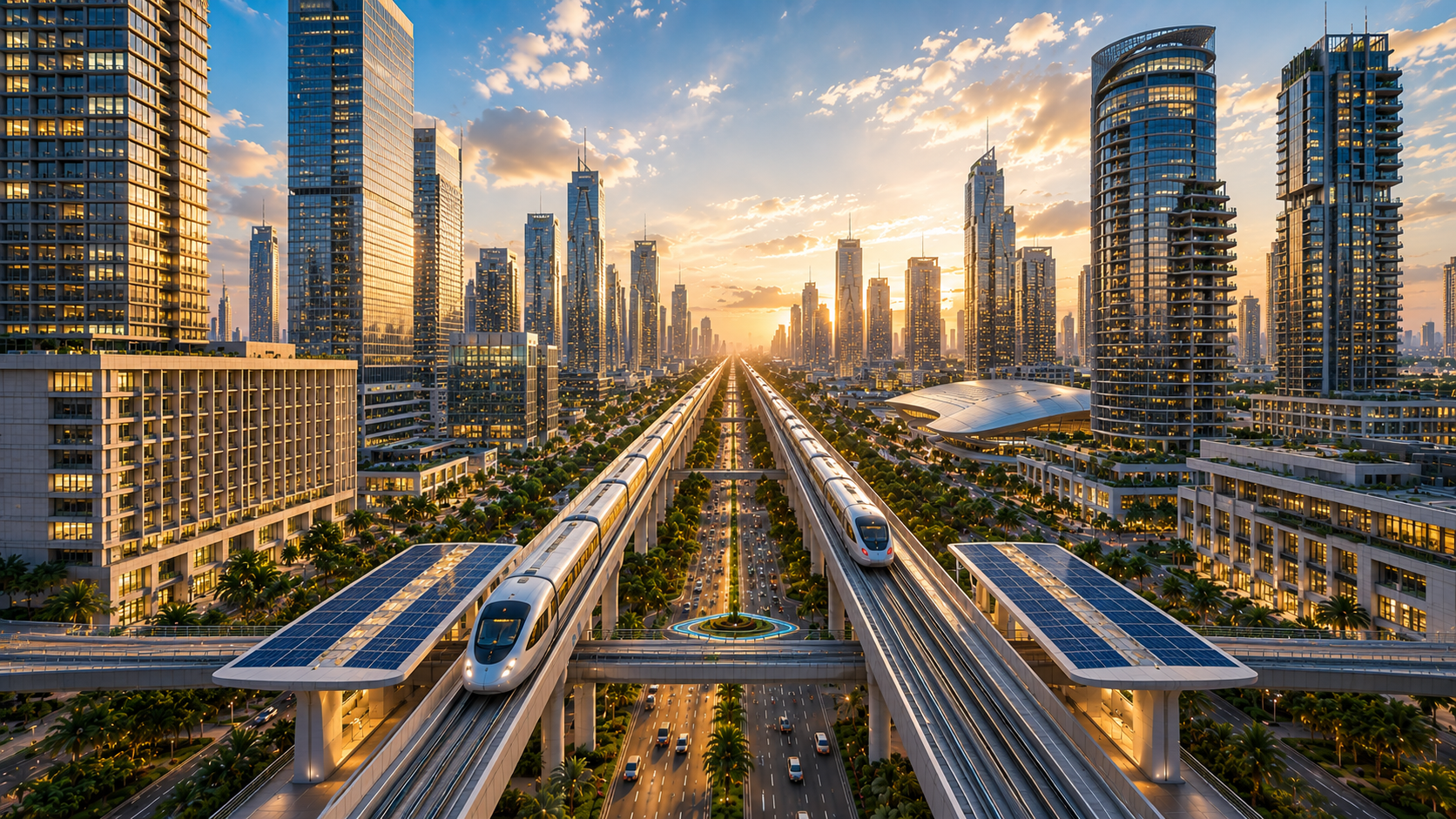
This is India's first indigenous semi-high-speed rail line built on broad gauge. The corridor runs 108 km as a double-line between Ahmedabad and Dholera. More than half the route is elevated on viaducts, which keeps the line above ground-level crossings and allows higher sustained speeds. The engineering was designed specifically for broad gauge, not adapted from standard gauge after the fact.
The rolling stock includes Vande Bharat trains for the fastest services, Namo Bharat for express stops, and Vande Metro for local commuter runs. All three types are manufactured in India. The fare structure starts at ₹50 for the shortest trip and tops out at ₹150 for the full Ahmedabad to Dholera journey. These are not luxury fares; they are commuter fares, built to attract daily riders.
The route begins at Sabarmati Terminal in Ahmedabad. That terminal is designed to integrate with three other systems: the Mumbai-Ahmedabad bullet train, Ahmedabad Metro, and local suburban rail. Passengers can transfer between all four without leaving the station complex. From Sabarmati, the line heads south through Gandhigram and Vastrapur before exiting the city core toward Moriya, where it connects to the Dedicated Freight Corridor.
| Station | Notes |
|---|---|
| Sabarmati Terminal | Integration hub: bullet train, metro, suburban rail |
| Gandhigram | Ahmedabad south, metro connectivity |
| Vastrapur | East Ahmedabad, metro connectivity |
| Moriya | Freight link: Dedicated Freight Corridor junction |
| Bavla | Industrial zone gateway |
| Dholka | Town center interchange |
| Bhimnath | Mid-corridor logistics hub |
| Vataman | Southern corridor junction |
| Hebatpur | Approach to Dholera SIR |
| Dholera SIR | Main terminal, smart city core |
| ✈️ Airport Spur (Navagam) | Branch to Dholera International Airport |
| 🏛️ Lothal Spur | Branch to National Maritime Heritage Complex |
Note: 10 mainline stations listed above. The remaining 3 stations are pending final route notification by Indian Railways.
The two spurs branch off the main line. The airport spur connects to Dholera International Airport at Navagam, and the Lothal spur reaches the National Maritime Heritage Complex where the Harappan dockyard was found. Both spurs ensure that the rail network serves the full Dholera ecosystem, not just the industrial core.
The corridor includes 3 mega bridges spanning major rivers and waterways, plus 39 road underbridges where local roads pass beneath the elevated tracks. The decision to elevate more than half the route on viaducts was driven by two factors: terrain and speed. The Gulf of Khambhat region has flat, flood-prone land, and keeping the tracks above grade avoids seasonal waterlogging issues.
The 39 underbridges maintain road connectivity for villages and towns along the route. Without them, communities would be cut off by the rail barrier. Each underbridge was sized to handle local traffic, from tractors to buses, ensuring the rail line does not fragment the landscape it crosses.
The primary reason this corridor exists is workforce commuting. Dholera's industrial zones need thousands of workers daily, and the expressway alone cannot handle that volume of private vehicles. A rail line with ₹50 minimum fares solves the last-mile economics of getting people to work and back home the same day.
The fare design is deliberate. At ₹150 for the full journey, a daily round trip costs ₹300. That is less than what many workers spend on fuel for a single commute by car. The Vande Metro services run at short intervals during morning and evening rush hours, and longer Vande Bharat trains handle peak demand with more seating capacity. The system is planned around industrial shift patterns, not leisure travel.
Sabarmati Terminal is the key integration point. The Mumbai-Ahmedabad bullet train (high-speed rail) stops at Sabarmati, as does Ahmedabad Metro Line 1 and the existing suburban rail network. A passenger arriving from Mumbai on the bullet train can transfer to the semi-high-speed rail and reach Dholera without stepping outside the station. That kind of intermodal connectivity is rare in Indian rail infrastructure.
The corridor also connects to the broader Saurashtra region through its station network. Towns like Bavla, Dholka, and Bhimnath gain their first modern rail link, which benefits local trade and daily movement even beyond the Dholera industrial context. The line serves multiple purposes: industrial commuting, regional connectivity, and tourism to Lothal.